
The Ultimate Cat Training Guide 2026

Often times, when people hear the term cat training guide, they only have one question:
Can Cats Really Be Trained?
The short answer is yes. Cats can be trained absolutely.
The longer and perhaps more significant answer is that how they are trained determines whether the training succeeds or fails.
Contrary to popular beliefs, cats are “not untrainable.” But they are surely selective learners. Studies in feminine behavioral science show that cats learn through timing, motivation and association.
It has also been established that reward-based positive reinforcement training is the most humane and efficient method for training cats. Cats respond better to structured training that respects their autonomy.
Training cats is important because it directly influences:
behavioral stability
Human cat bonding
Stress reduction & mental stimulation
Household harmony (especially in multi-pet homes)
Many cat parents, especially first-time owners need cat behavioral advice. So, this guide will explain how to train a cat safely, ethically, and effectively, using modern veterinary-approved methods, not obsolete myths.
Related Readings: Is Online Pet Care Consulting Right for Your Pet?
Understanding Cat Behavior (before you try to train anything)
How Cats Think & Learn
Cats are attention seekers, not people-Pleasers. Unlike dogs, which evolved beside humans for cooperative tasks, cats evolved as independent hunters, which, to a great extent, shapes how they learn.
According to the International Cat Association (TICA), cats:
Learn through results, not commands
Repeat behaviors that benefit them directly
Shut down when confronted with fear, force, or inconsistency.
This is why, in the case of cats, punishment fails and training based on confidence works.
Motivation vs Independence
A cat’s freedom is not resistance; it is self-preservation. Training successful when motivation is aligned with:
Many new cat owners mistake a cat’s independence for resistance. But it is actually ingrained in their behaviour. This is a way of self-preservation. Therefore, training only succeeds when motivation is aligned with:
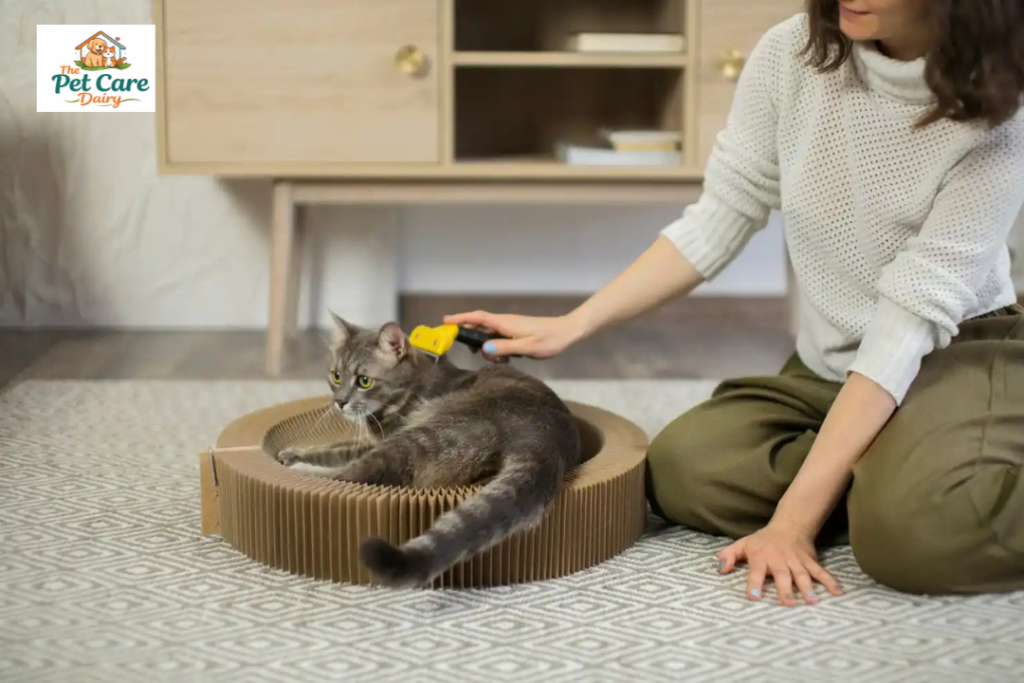
The Cat Training Guide 2026 focuses on teaching your cat good behaviors through patience, consistency, and positive reinforcement. Unlike dogs, cats are more independent, so training requires a gentle and rewarding-based approach. Begin with basic habits such as litter box training, ensuring the box is clean, easily accessible, and placed in a quiet area. For scratching behavior, provide a scratching post and encourage its use instead of furniture.
Using treats, praise, or toys as rewards helps reinforce positive actions, while undesirable behavior should be gently redirected rather than punished. Short and routine training sessions work best, as cats have a shorter attention span. Modern training methods in 2026 also include clicker training, which helps cats associate a sound with rewards, making learning quicker and more effective.
Mental stimulation is equally important—interact toys, puzzle feeders, and playtime keep cats engaged and reduce boredom-related behavior issues. Understanding your cat’s body language and routine helps build trust and improves communication. With consistency, love, and the correct techniques, cats can learn commands, routines, and good habits, becoming well-behaved and happy companions in a modern home.
food rewards
play
Curiosity
comfort
Bottom line: Cats do not like authority. They respond to incentives.
Why Patience Beats Punishment
Positive Punishment for cats increases:
Anxiety
avoidance behavior
aggression
learned helplessness
Veterinary behavioral studies have consistently stressed that punishment damages learning pathways in cats. A stressed brain cannot learn.
It is necessary to note that if a cat is not listening, the problem is never defiance. It is poor timing, communication or inconsistency in commands.
Cat Training Basics
Tools You’ll Need
According to feline training experts at Class Act Cats, effective cat training tools include:
Soft, high-value treats (but in limited amounts and pea-sized)
A clicker or consistent verbal marker (“yes”)
A calm, distraction-free environment
A calm handler
target sticks
A treat bag
Always avoid large treats Cats filling up quickly and losing interest. In addition, it also adds many extra calories to their diet.
Best Time for Training Sessions
Feline behavior studies have demonstrated that cats learn best:
Before meals (slightly hungry, not starving)
During natural activity peaks (morning or evening)
Avoid training when your cat is overstimulated, sleepy or stressful.
Short Sessions = Better Focus
Cats typically have short attention spans. Optimal session length:
3–5 minutes
1–2 sessions daily
Longer sessions may increase frustration and decrease retention. Hence, try to end successful sessions, not on exhaustion.
Related Readings: 10 Advantages of booking vet consultation online vs. in-person visits?
How to House Train Your Cat (Step-by-Step)?
It is necessary to note that house training is not instinctual. It is environment-dependent.
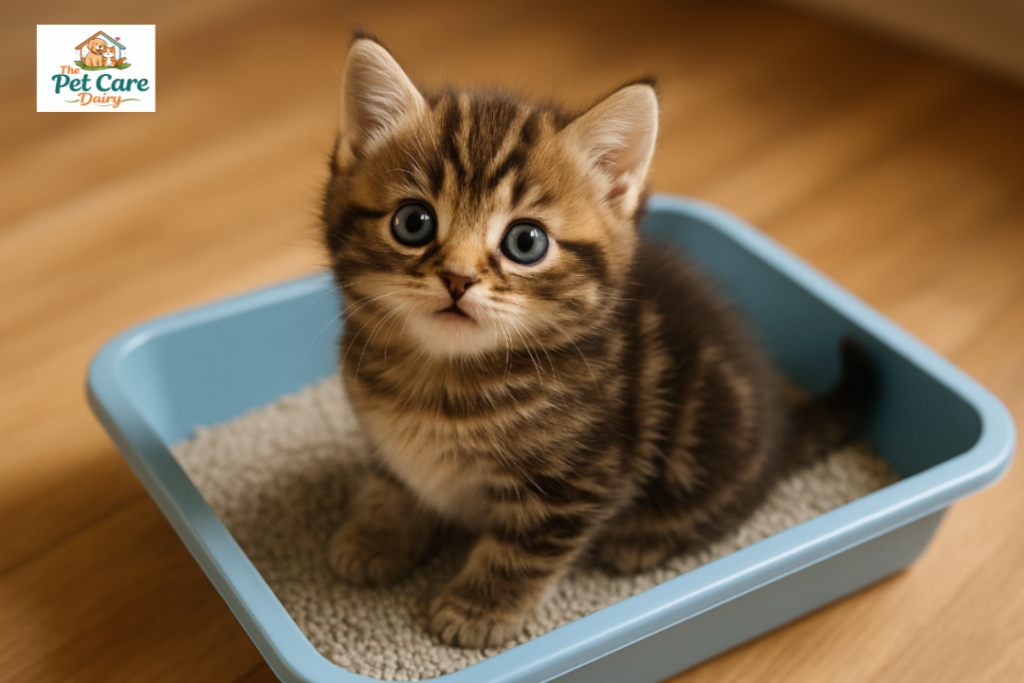
Introduce the Litter Box Correctly
Key principles:
One litter box per cat plus one additional
Quiet, accessible location
Unscented Litter
If you have a multi-cat household, introduce them appropriately to avoid the development of inter-cat aggression, fear and anxiety-related behaviors.
Place kittens into the box after:
eating
Sleeping
play
This exploits natural elimination timing.
Avoiding house accidents
Consider household accidents as communication, not misbehavior. Common causes include:
Dirty litter boxes
Poor placement
Stress or medical issues
Never punish cats for house accidents. This creates fear-based avoidance. Instead, training should primarily involve the correct environment and positive reinforcement.
If you have an older kitty, you can use Catnip (a herb that has unique calming effects on cats) to reinforce positive behaviors like scratching posts, learning tricks, using the litter box, exploring a carrier, etc.
Cleaning & Placement Tips
Use enzyme-based cleansers only. Ammonium smells like urine and encourages repeated marking.
Avoid placing litter boxes nearby:
food bowls
washing machines
Loud appliances
In the case of cats, confidentiality equals compliance. Hence, focus on creating a stable, calm and private environment for your cats.

What If the Problem Persists?
Persistent issues may indicate:
Urinary tract disease
Stress-related elimination
Territorial conflict
You must rule out medical issues before going for behavioral adjustment.
Positive Reinforcement Training Techniques
What Is Positive Reinforcement?
Positive reinforcement holds great significance in pet training. It means rewarding desired behavior immediately, so the brain connects the action with the outcome.
Rewards must occur within 3 seconds, or your cat may not associate it with appropriate action.
Consistency is far more important than treatment type.
Calm delivery improves retention
Treat Timing & Reward Strategy
Effective timing looks like:
Cat performs behavior
Marker sound (“click” or “yes”)
Treat immediately
The marker works by bridging the gap between action and rewards.
Why You Must Avoid Punishment
Punishment teaches:
Fear of the handler
Avoidance, not understanding
Defensive aggression
As per behavioral studies, cats trained by clickers showed higher learning retention and lower stress markers than cats trained by punishment.
Many people believe that cats cannot be trained, but modern animal behavior research proves otherwise. In 2026, cat training has become an important part of responsible pet ownership, helping cats develop positive behaviors while reinforcing the bond they share with their owners. Cats are intelligent, curious, and capable of learning a broad range of skills when training is approached with patience, consistency, and positive reinforcement. Unlike dogs, cats often learn on their own terms, making it essential to understand their unique personalities and motivations.
The foundation of successful cat training is positive reinforcement.
Cats respond best when good behavior is rewarded with treats, praise, toys, or attachment. Punishment-based methods are not recommended because they can create fear, stress, and distrust. Instead, rewarding desirable behaviors encourages cats to repeat those actions naturally. Timing is important—reward should be given immediately after the desired behavior so the cat can clearly associate the action with a positive outcome.
One of the first training goals for any cat should be litter box training. Most cats naturally develop litter habits, but providing a clean, accessible litter box in a quiet location promotes consistent use. The litter box should be cleaned regularly, as cats are known for their cleanliness and may avoid filthy facilities. Positive reinforcement can help establish good litter habits, especially for kittens and newly adopted cats.
Teaching a cat to respond to its name is another valuable skill.
Start by saying the cat‘s name in a calm, friendly tone and immediately offering a treat or reward when the cat looks toward you. Repeating this process regularly helps the cat recognize and respond to its name. Once mastered, this skill can improve communication and make other training exercises simpler.
Clicker training has become increasingly popular among cat owners worldwide. A clicker produces a small sound that marks the precise moment a cat performs the desired behavior. The click is followed by a reward, helping the cat understand what action earned the treat. Clicker training can be used to teach commands, tricks, carrier acceptance, and even cooperative behaviors such as nail clipping or veterinary handling.
Scratching behavior is a natural feline instinct that frequently requires guidance rather than correction. Rather than attempting to stop scratching entirely, owners should provide appropriate scratching posts and reward their cats for using them. Positioning scratching surfaces near favorite resting areas and play zones can encourage proper use while protecting furniture.
Training cats to enter carriers voluntarily can significantly reduce stress during travel and veterinarian visits. Leaving the carrier open in the home with comfortable bedding, treats, and toys helps create positive associations. Gradual training sessions encourage the cat to see the carrier as a safe and familiar space rather than something to fear.
For more such pet care information, connect with us today: https://thepetcarediary.com